Estate Planning: Equal or Equitable Distribution?
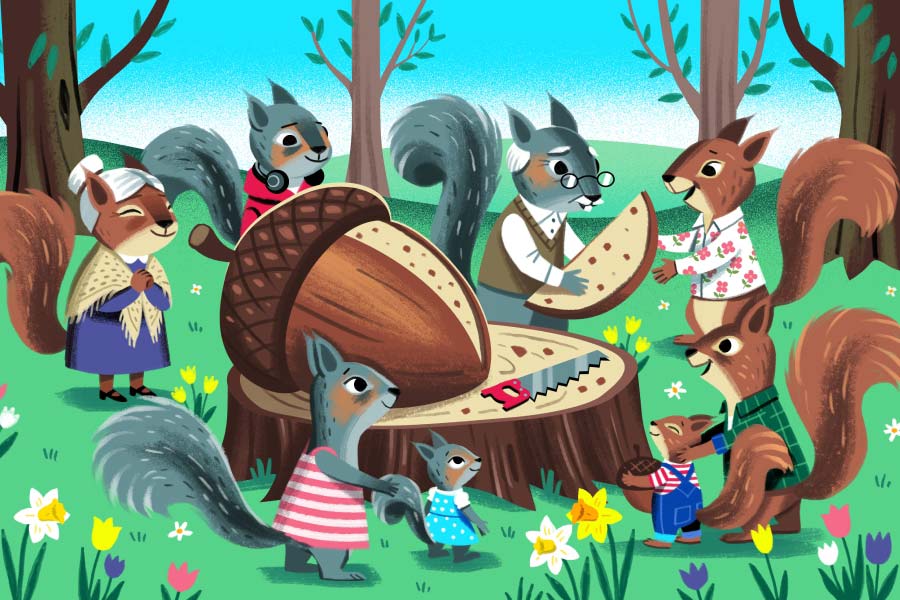
Wealthy Americans expect to bequeath an average of $4.1 million per person in assets, according to a 2024 Schwab survey.1 And while estate planning typically focuses on the how—including intricate tax strategies often involving trusts and wills—to whom can be just as complicated.
What's more, heirs may have a sense of your overall estate, but without meaningful discussions about your thinking and intentions, they may see its division as a referendum on their relative worth, which can carry significant emotional costs.
Yet these discussions needn't start with a focus on your wealth per se, but rather your values when it comes to money management and the lessons you've learned along the way.
Define your reach
The first order of business is to figure out how widely to distribute your estate. Reflecting on your journey, challenges, and accomplishments may help you identify the principles you want to adhere to and the people for whom you want to provide.
Within the context of those values, consider:
- Family: How do you define family? Is the definition confined to your spouse and children, or might you include stepchildren, siblings, or even an ex-spouse? If you're unmarried, at what point does a partner become an heir? In today's world, the definition of family isn't always so clear-cut.
- Indirect heirs: Will people outside your family—say, a close friend or longtime caregiver—be among the recipients of your estate?
- Generational depth: Will the next generation be the sole beneficiaries of your estate, or would you like to also provide for grandchildren and future generations as yet to be born?
- Charitable, spiritual, and other organizations: Would you like to support certain groups that represent your benevolence or faith as part of the legacy you'd like to leave?
Consider interpersonal dynamics
Reflecting on your values may bring to light certain challenges that you'll need to address, such as:
- Disagreements between spouses: For couples, differences of opinion about heirs can stymie effective planning. Articulating your individual goals and how to overcome any divide is an important step and time well spent. If there's an impasse, ask what positive outcomes might result from each scenario instead of focusing on the potential pitfalls. Another approach is to use "I" rather than "you" statements to advocate for your position rather than unfavorably characterize the other person's.
Strained relationships: Determine whether your plans could exacerbate familial discord. Disinheriting a child, for example, can cause years of emotional damage and drive a wedge between surviving family members. However you choose to deal with such issues, don't avoid difficult conversations. Explaining your decision to all affected parties can help reduce conflict once you're no longer there to express your thinking.
If you do intend to exclude a direct heir from your estate, be sure your legal documents contain explicit disinheritance language. Without this, an heir may successfully argue in court that the omission was an oversight.
Splitting the pie
Once you've decided who will receive your assets, there's still the question of how much to give each heir. There are typically two ways to divide your estate:
- Equally: Many people bequeath assets of equal value to avoid any perception of favoritism. If you take this route, consider whether you'll count gifts given during your lifetime—such as help with a down payment—as an advance on an heir's inheritance.
- Equitably: The phrase "fair doesn't always mean equal" can be applied here by giving according to each heir's unique circumstances. A child with disabilities, for example, may require a lifetime of financial support, whereas their fully independent sibling may not.
With either approach, it's critical to communicate your plans in detail with each heir ahead of time to help minimize confusion, conflict, and hurt feelings when you're no longer there to answer their questions.
For example, if one child stands to inherit less than another, explain your rationale in the context of values—such as, "Your brother is living paycheck to paycheck, while you're well established, and our primary goal for each of you is security and stability." This helps clarify that your decision is about need, not love.
These conversations are rarely easy, so don't be afraid to bring in a trusted financial advisor, a mediator, or even a therapist—especially if tension already exists among family members.
Beyond money
Although much of estate planning concerns the distribution of your most valuable assets, some of the biggest disagreements arise over sentimental items of little or no financial worth.
One approach is to see if your heirs have their hearts set on any particular items. You can even gift these possessions while you're alive—though make sure you declare to the IRS anything over the annual gift limit ($19,000 in 2026).
Some states require you to list heirlooms or keepsakes and who will receive them in your will or trust. Others allow a so-called personal property memorandum, which can be altered without a notary but must be referenced in your will or trust.
In both cases, it's a good idea to photograph each item and explain in writing why you'd like a particular heir to receive it. That said, a paper trail gets you only so far—the key is to demystify your thought process so heirs know not only who gets what but also why.
1Charles Schwab High Net Worth Investor Survey, 12/2024.
Discover more from Onward
Keep reading the latest issue online or view the print edition.