How to Handle a Late-in-Life Career Change
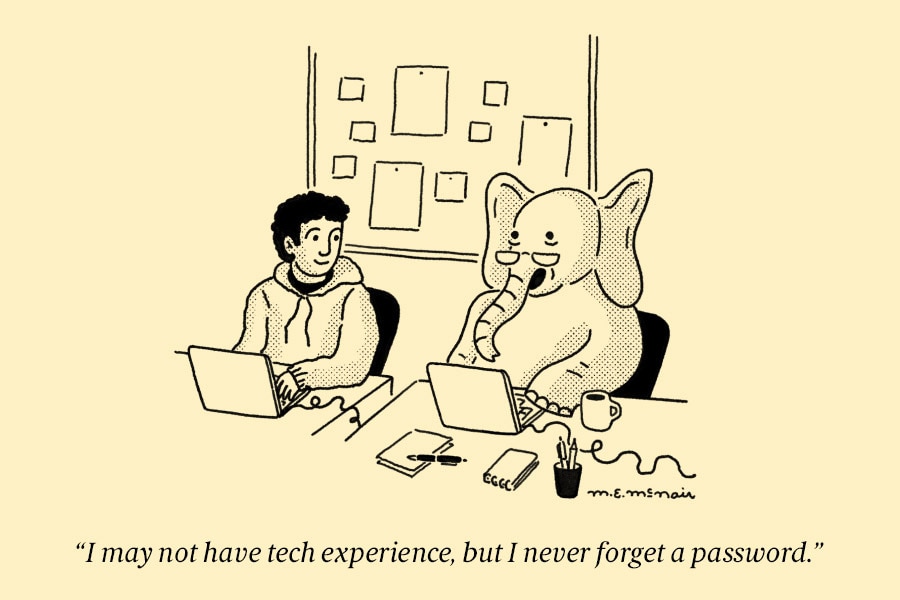
Whether prompted by an unexpected layoff or the desire for a second act, a late career change has far-reaching implications. Here, Christina Faulkner, CFP®, CWS®, AWMA™, a Schwab financial consultant based in Westlake, Texas, answers client questions about how to effectively navigate this later-in-life transition.
I'm 57 and was just laid off. At what point should I consider a "separation from service" withdrawal from my 401(k)?
"You can take penalty-free separation from service withdrawals if you leave your job for any reason—layoff, resignation, retirement, or termination—between ages 55 and 59½. But consider such a withdrawal only as a last resort," Christina says. "All things being equal, you want to leave your tax-deferred accounts untouched as long as possible to maximize their compound growth potential.
"Before touching your 401(k), look at other levers: Can you get by on a partner's income alone? Are there savings or taxable brokerage assets you can liquidate first? This is the time for a financial check-in. The most important goal, where possible, is to protect the core of your wealth now so that your long-term plan doesn't suffer."
I received a large severance package when I was laid off. How can I manage the spike in taxable income?
"Remember that severance is negotiable," Christina says. "Before you sign, ask whether the income can be paid out across multiple tax years. The same is true of a large signing bonus. If you've already accepted the offer, consider all the usual tactics for reducing your taxable income, such as maxing out tax-deferred savings, harvesting losses to offset up to $3,000 of ordinary income, or making a large charitable donation."
I'm leaving my job voluntarily. How should my stock awards factor into my plan?
"It depends on the type of awards you have," Christina says. "With restricted stock units, typically you must be employed on the vesting date to receive the shares. So be sure to look at your vesting schedule, then decide if it's worth sticking around until they vest. That said, you normally get to keep any stock awards that are already vested, though you may have a limited time in which to exercise them."
Learn more about how equity compensation is taxed.
What should I do with an old 401(k)?
"You generally have three viable paths: leave it in your previous employer's plan, roll it into your new employer's plan, or roll it into an IRA," Christina says.
"Both leaving it with your former employer and transferring it to your new employer retain the benefits that 401(k)s offer—namely, protection from creditors and the ability to take separation from service withdrawals. However, you're stuck with the plan's specific investment menu, which is often limited to a few dozen mutual funds.
"The third option, which many clients find helpful, is the IRA rollover. It pairs greater control with a wider universe of investment options, including managed solutions, even if they don't always enjoy the same level of creditor protection as 401(k)s or allow for penalty-free withdrawals before age 59½."
Learn more about rollover IRAs.
When comparing new opportunities, what should I consider beyond salary?
"Employers are getting more creative with compensation," Christina says. "So, what you're really looking for is the overall economic value of the package. For example, I'm seeing more and more employers offering people in their peak earning years nonqualified deferred compensation, which allows you to defer a portion of your pay now to take it during retirement when you may be potentially in a lower tax bracket.
"Employers might also provide life insurance policies with long-term care riders, legal and estate-planning services, and even tutoring and college prep support for your children. If you're lucky enough to be weighing competing offers, these types of benefits could tip the scale one way or the other."
Discover more from Onward

Keep reading the latest issue online or view the print edition.