Inflation Monitor: A Two-Sided Inflation Story

Inflation data is starting to tell two very different stories. On one hand, commodity prices have rolled over since mid-May, which could provide a welcome dose of inflation relief moving forward. On the other hand, sticky price categories—which tend to adjust more slowly—remain well above the Federal Reserve's 2% target, suggesting policymakers may have more work to do before they can secure price stability.
The Bloomberg Commodity Index (BCOM)—a diversified benchmark tracking 24 commodity futures contracts across energy, agriculture, and metals—helps illustrate the first part of this inflation story. It's fallen nearly 12% since May 11, driven largely by the retreat in crude prices. With the United States and Iran signing an interim peace agreement, which should gradually reopen the Strait of Hormuz, this index could potentially continue to face downward pressure.
Although commodity prices don't move in lockstep with consumer prices, they typically ripple through the broader economy over time. For investors and the Fed, this suggests at least some of the forces that have fueled inflation this year may continue fading.
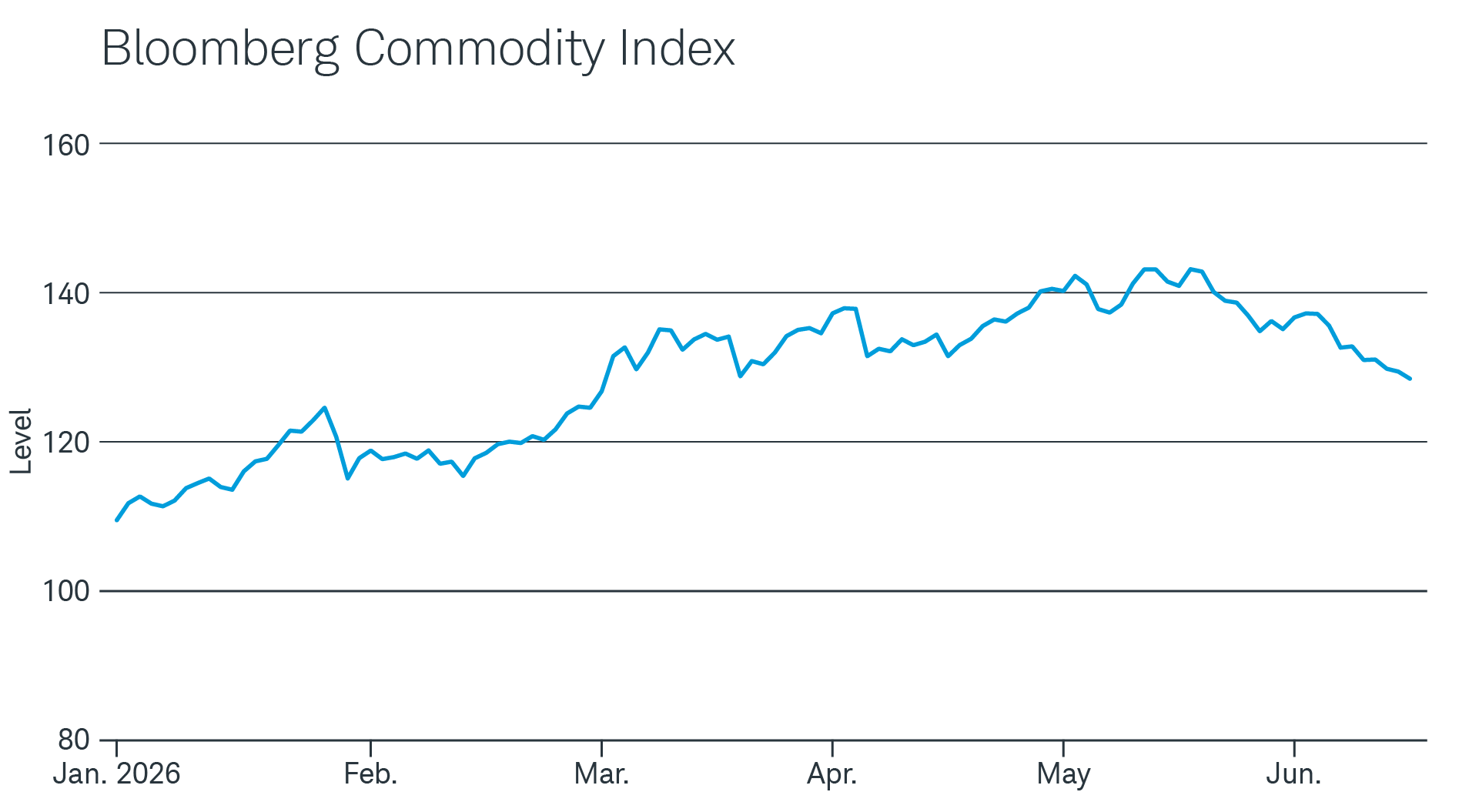
Data source: FactSet via The Wall Street Journal
For illustrative purposes only.
Of course, commodity prices represent just one piece of the puzzle. And one under-the-radar inflation gauge potentially explains part of the rationale behind the Fed's hawkish turn at its recent policy meeting.
The Atlanta Federal Reserve's Sticky-Price Consumer Price Index (CPI)—which separates the components of CPI into flexible (quick to change) and sticky (slow to change) categories—remains red hot. Flexible prices jumped 7% from a year ago last month, while sticky prices rose 3.1%.
These sticky price categories are particularly important because they are not only slow to change, but also less likely to reverse once they've moved higher. Prices for things like housing, medical services, tuition, and sporting events are often tied up by long-term price agreements or kept elevated by stubborn labor and operating expenses.
While commodity prices' recent drop could potentially offer relief for the more flexible components of CPI in the months ahead, sticky prices are more insulated from commodity price drops, particularly in the near term.
This could make the final stretch of bringing inflation back down to the Fed's 2% target more difficult. It could also create a gap between headline inflation—which includes more volatile (and flexible) food and energy prices—and core inflation, which strips out these categories to better reflect underlying price pressures.
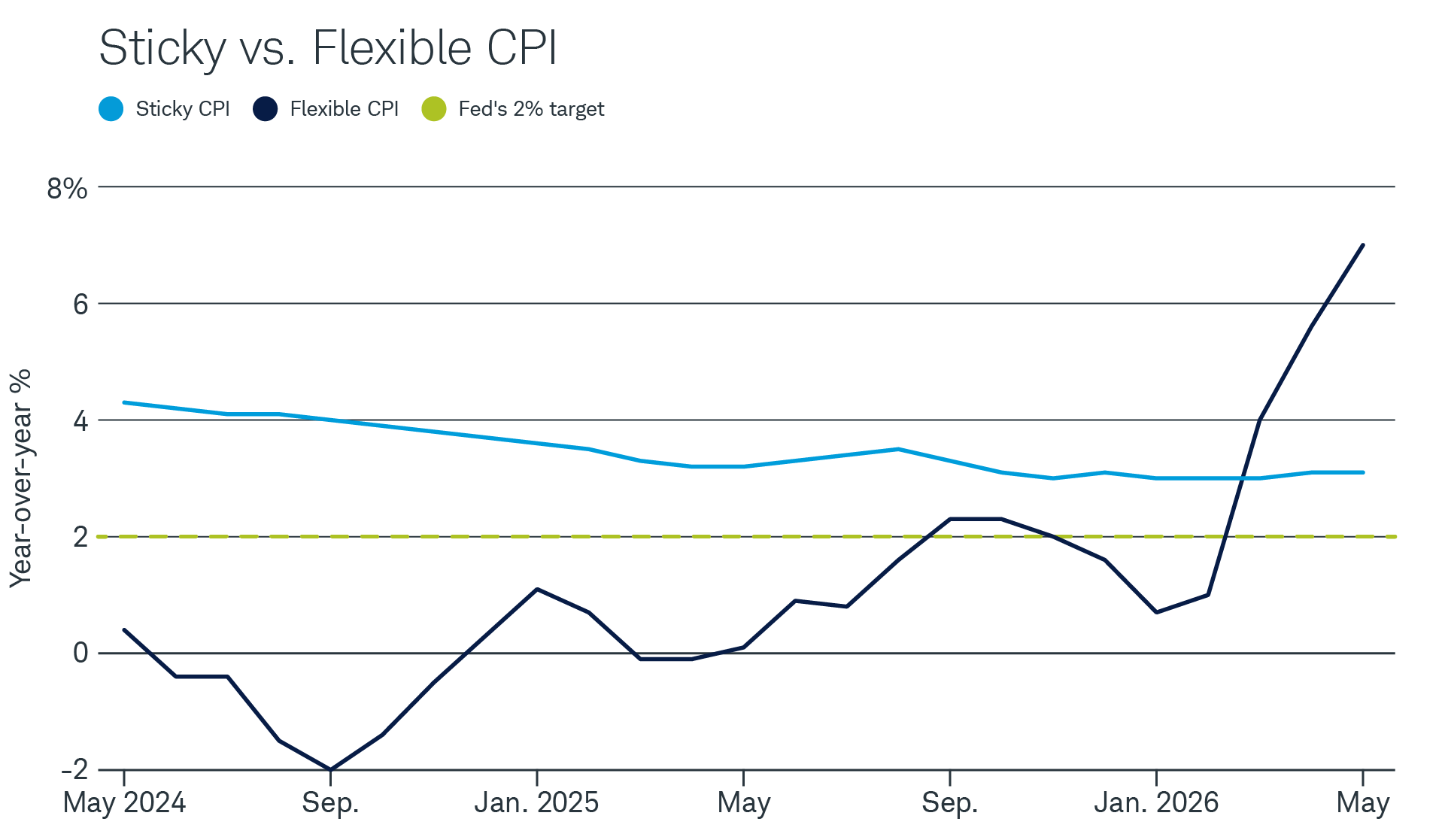
Data source: Federal Reserve Bank of Atlanta
For illustrative purposes only.