Investing Basics: Cryptocurrencies and Blockchains
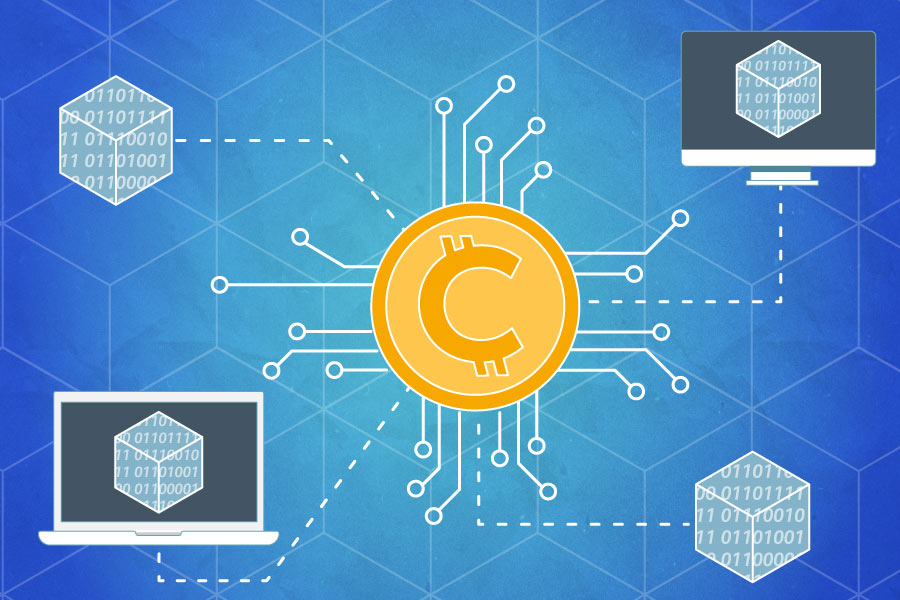
Blockchains and cryptocurrencies have evolved from a niche online curiosity into a phenomenon that's reshaping global financial markets and attracting trillions of dollars in investments.
Investors new to cryptocurrencies should start with the fundamentals—to first understand exactly what blockchains and cryptocurrencies are and how they work. And as cryptocurrency novices begin to consider investment strategies, they should keep the inherent risks of cryptocurrencies in mind.
What is a blockchain?
To understand cryptocurrencies and blockchains, it's useful to understand why bitcoin was invented: to diminish the power of banks and governments over financial transactions, to enable direct payments between individuals, and to allow for a consensus on who paid what to whom.
As the underlying infrastructure for cryptocurrency transactions, the blockchain is central to that vision. A blockchain is simply a shared digital ledger, or a record of all transactions, visible to everyone in a given network. Think of it as a shared digital notebook, like a Google Doc; no one can add anything it to until everyone with access (or at least a majority) agrees. And any additions made are encrypted and can never be altered.
In other words, a blockchain is a permanent record—a list of transactions, stored in blocks, and "chained" together chronologically. With blockchains and cryptocurrencies, the thinking goes, who needs banks?
What are cryptocurrencies?
Cryptocurrency is simply a medium of exchange—in the form of digital tokens—built on top of blockchain technology. But blockchains have applications beyond simply recording transactions. They can host commercial applications—most commonly in the decentralized finance (DeFi), logistics, or smart contracts fields—and cryptocurrencies are used to compensate those who own and operate these blockchains.
Consider the Ethereum blockchain and its native currency, ether, the second-biggest cryptocurrency by market capitalization, behind bitcoin. Ethereum is one of the most widely used blockchains globally, a kind of massive, decentralized app store. Anyone who wants to put their app on the Ethereum blockchain needs to pay fees in ether, which has been dubbed "digital oil" by Ethereum enthusiasts.
How do blockchains work?
Blockchains are maintained by networks of people running computers (known as nodes), each containing a shared copy of the blockchain. (Bitcoin, for example, has tens of thousands of nodes.) There is no centralized authority. Each node verifies transactions independently, and each blockchain has its own rules for achieving consensus on what qualifies as "true" before entry into the ledger.
Why would node operators dedicate time and resources to verify transactions? For a chance to get paid in the blockchain's native cryptocurrency.
The two dominant systems for ensuring the accuracy and immutability of the ledger are proof-of-work and proof-of-stake. Both determine which node operator gets to add a block to the chain and collect their payment for doing so.
But they operate differently. With proof-of-work, the system used by bitcoin, nodes "mine" for cryptocurrency by solving highly complex math problems. The winning node gets to submit a proposed block of transactions to the network, at which point each node verifies the transactions independently. If a consensus is reached, the "miner" adds the block to the chain and collects the reward.
The security of proof-of-work stems from the fact that solving even a single math puzzle requires significant resources—specialized computers and enormous amounts of electricity. To alter previous blocks would require solving the puzzle for each succeeding block and doing so quickly enough to catch up with the network as it continues to add blocks. This would require more computing power and electricity than the rest of the network combined—at a cost of millions or even billions of dollars.
Proof-of-stake, which is used by the Ethereum and Solana blockchains, among others, takes a different approach, partly to reduce energy consumption. With proof-of-stake, potential validators "stake"—that is, commit a certain amount of the blockchain's native cryptocurrency—as a type of insurance. The winning validator is chosen at random, with a bigger stake offering better odds. If they validate honestly, they earn rewards. If they attempt to cheat, they lose their stake. This process aims to eliminate the economic incentive for cheating.
Why invest in cryptocurrencies?
Investors typically see four basic rationales for buying a cryptocurrency. They view it, particularly bitcoin, as a store of value and hedge against inflation; they believe in the commercial potential of the underlying blockchain; they see it as a growth asset with low correlation to others; or they use it as a short-term trading vehicle to capitalize on its volatility.
Bitcoin typically falls into the first and third categories. Unlike most other major coins, it has a finite supply by design, which many consider a core value proposition—a store of value and hedge against debasement of national currencies through "money printing" by central banks.
Investors tend to view the other major coins somewhat differently. In most cases, the supply is controlled but not finite. Many invest because they believe in the underlying technology and see blockchains as a revolutionary tool capable of reshaping entire industries. They're betting that blockchains that offer superior infrastructure for a new generation of digital applications will see growing demand for their currencies, driving up their value as long as supply is controlled.
And of course, assets experiencing rapid value appreciation—not to mention headlines about crypto millionaires—naturally attract speculators and momentum traders, adding fuel to the rise. Regardless of the particular strategy or rationale, some institutional investors and financial advisors now see cryptocurrencies as a legitimate asset class and tool for diversifying a portfolio.
How to invest in cryptocurrencies
For a long time, the primary way most people could purchase crypto was on lightly regulated crypto-native exchanges. That's still a common choice. On those exchanges, investors can choose to buy the coin (sometimes referred to as "spot" buying) or gain price exposure through futures contracts, options, and swaps.
Each approach has trade-offs. Direct ownership may require some technical knowledge of digital security. Some exchanges hold coins for investors, while others require investors to assume custody of the coins and responsibility for their security. That involves managing self-custody wallets and ensuring safe storage of private keys/passwords. Investing indirectly, on the other hand, is more convenient, but the investment vehicles may not track cryptocurrency prices perfectly.
Investors can now also gain exposure to cryptocurrency prices with products trading on the New York Stock Exchange and Nasdaq. As of late 2025, the selection includes exchange-traded products (ETPs), as well as futures and options. None of the ETPs offer actual ownership of the underlying currency. Though spot ETPs do purchase the underlying coin, investors merely hold shares that represent a claim on the fund's net asset value. And though convenient, ETPs often charge management fees. These investment vehicles are more closely regulated and don't require investors to assume responsibility for security of the underlying assets.
An investor's choice should align with their risk tolerance, technical comfort level, and investment goals.
Ways to invest beyond holding coins
There are other indirect ways to gain exposure to cryptocurrency markets.
Some crypto-curious traders opt to buy stock in blockchain-related companies. Mining hardware manufacturers, payment processors that handle crypto transactions, and companies that hold significant cryptocurrency on their balance sheets—known as cryptocurrency treasury companies—all offer indirect exposure. When crypto prices rise, these stocks often benefit, though they're subject to their own business and company-specific risks as well.
Risks of cryptocurrency investing
Cryptocurrency investing carries substantial risks that every investor must understand. Price volatility stands out as the most obvious. It's not unusual for prices of even the biggest cryptocurrencies to move much faster than prices of equities and even some commodities, with big swings up and down. Smaller, less established coins can experience wild price fluctuations. This volatility creates opportunities for big profits but also a risk of big losses. In times of turmoil, liquidity in these markets could dry up completely, with no guarantee of a secondary market, leaving investors struggling to find an exit.
Security risks are ever-present. Cryptocurrency exchanges have been hacked, resulting in millions of dollars in stolen funds. If someone steals your private keys—the cryptographic passwords that enable access to your coins—they can take your cryptocurrency and there will be little you can do about it. Lost passwords carry the same consequence: permanent loss of access to your holdings. Irreversibility makes mistakes costly. Once you send cryptocurrency to the wrong address or fall victim to a scam, there's no customer service department to call, no way to reverse the transaction.
Even buying shares of ETPs on the major exchanges comes with unique risks. Beyond normal price volatility, the extreme leverage and lack of "circuit breakers" in spot markets, which trade 24/7, mean prices can move way past any stop orders during after-hours trading. There is also the question of the security of the coins bought by ETPs, which are held by a handful of companies. Patchy and evolving regulations might also pose a risk to blockchains and cryptocurrencies, while online exchanges could also face a shifting regulatory landscape.
Bottom line
Cryptocurrency represents one of the most innovative—and riskiest—developments in modern finance. Many see blockchains and digital currencies as a compelling alternative to traditional financial systems, and many more see the potential for significant profits from this burgeoning financial ecosystem as well as price gains in the currencies.
Understanding how blockchains and cryptocurrencies work is an essential first step for any potential investor. Recognizing why they exist, what problems they aim to solve, and what makes them attractive to investors provides necessary context. But that knowledge alone doesn't eliminate risk.
Investors should treat cryptocurrencies as highly speculative and as a high-risk transaction. The discipline, skepticism, and risk management that apply to traditional investing are even more essential here. If you're considering investing in any cryptocurrency, consider starting small, always research thoroughly, and never invest money you can't afford to lose.
The cryptocurrency story is still being written. Whether it represents the future of money or a cautionary tale about speculation remains to be seen.